Words by Veronica Anaya / Photos by Jess Farran
Music is an art form that welcomes the idea of multiple media to enhance the story and feelings embedded into every song, album, and discography of an artist. The use of various media to tie in the story or world created by an artist, through album covers, music videos, and films, creates an enriching experience. One where listeners are truly brought into its creator’s headspace, opening not only the artist’s vulnerability but their own as well.
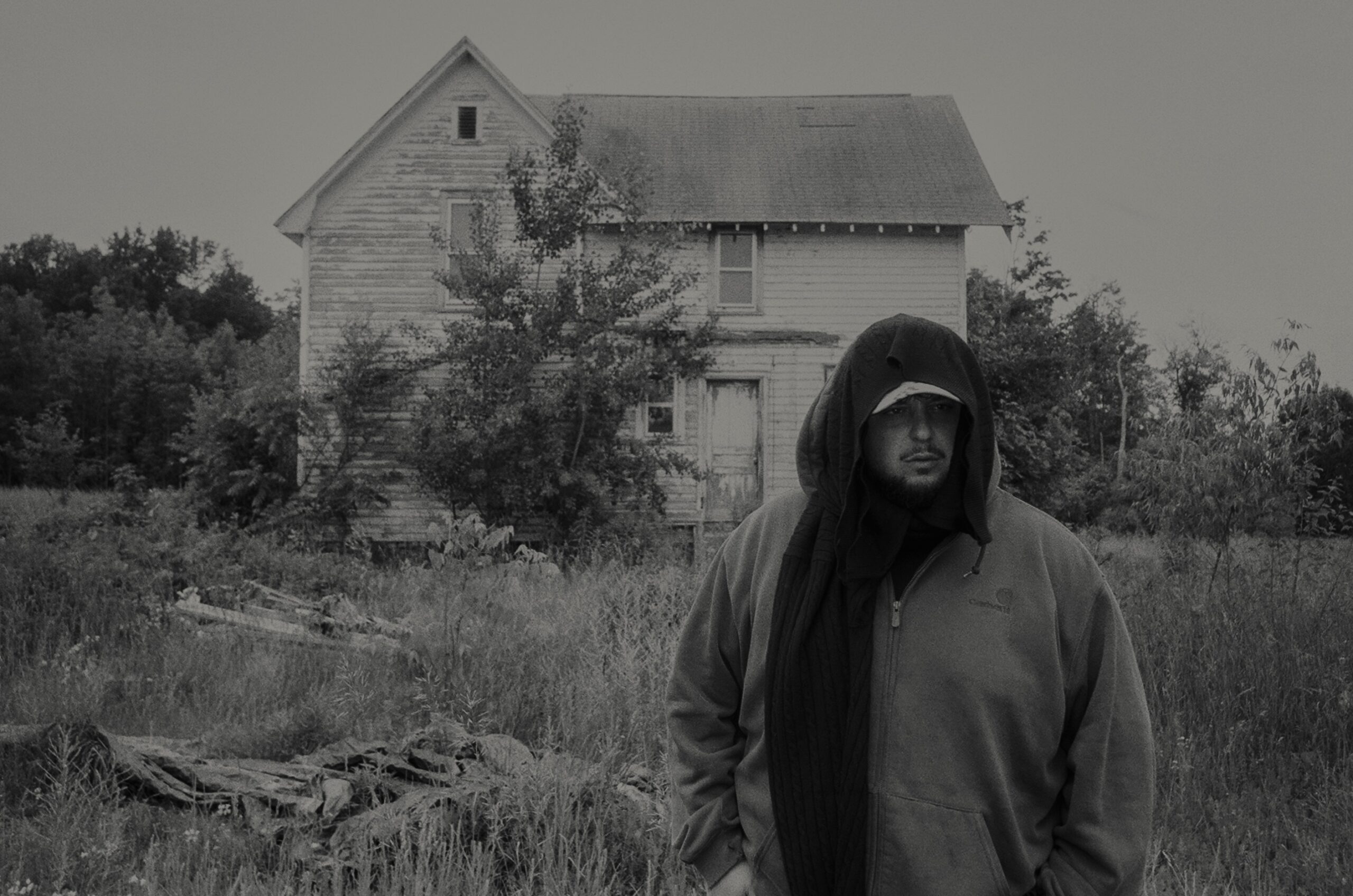
Tom Fattorusso, a Brooklyn-based artist and producer known as Tomás Tomás, has just released his newest single, “9th Life,” along with a self-made video. Today, he also announces his forthcoming EP Sweet Sleep and accompanying short film co-directed by Jaedan Martell, I Gotta Look Up More, which will contain a few songs from the EP plus an original score, arriving in November.

Tom has taken the time to explore his artistry in its truest form, unglamorous and sonically adventurous, which has shaped who he is as an individual and as a musician. He first started his artistic journey in music production, which made him keenly aware of the musicality and production skills of any song, drawn to Clams Casino‘s groundbreaking, sense-bending sound for one example. With his move beyond the strictly musical, it’s evident Tomás Tomás is an artist of many talents, immersing himself in film and the other creative aspect of presenting his music. Eventually bringing skills learned through an immersion in visual media to the music itself, his productions as Tomás Tomás are deeply influenced by first-hand life experiences and the art he consumes, resulting in music that’s both raw and vulnerable but also carefully sculpted.
“9th Life” is a poetic and emotionally vulnerable song with Tom opening himself up and inviting listeners into the space he is in. From its opening seconds, the heart of the song is established—full of nostalgia and melancholia—not only through lyricism and instrumentation but also through the production as well.
The song starts off with a serious of ambient sounds–a faint whoosh of air, what could be an idling engine, the sound of rustling paper and scribbling on the same. Within seconds, chords strummed on a guitar are heard from far in the distance or perhaps from a faint radio transmission (or a cheap practice amp) with the veil of distortion making the guitar sound tinny, as if the song is being played from an old VHS tape, which only adds to the sense of nostalgia and longing. Once Tomás Tomás’ voice enters, suddenly the frequency range is filled out. But still the song lies behind a veil of spatial ambience. As a listener, it gives the impression of lying in an empty room as the song floats and echoes over you.


Even as the sonic spectrum is filled out, the distant echo-like timbre of the vocals and other musical elements only adds depth to the sense of nostalgia and overall melancholia of “9th Life”. At the same time, Tom’s nuanced production gives the impression that, in fact, it’s not a distant emotion or memory he’s experiencing at all (to these ears at least) but rather a moment he’s currently facing and still processing, distant but at the same time confrontational.
This confrontation comes though most especially in Tom’s vocals towards the climax of the song, right before it reaches its peak. As his voice recedes, the rest of the song fades in volume as well, creating a moment of repose right before the drums enter for the first time. The angelic quality of his singing doesn’t feel as if he’s grieving, but as if he is still holding on and yearning, which is where the more rigid and raw emotions arise from. “9th Life” soon draws to a conclusion, again receding off into the distance, completing the song’s brief but intricate journey—plays with highs and lows both in sonic equalization and emotional impact throughout–ending with what sounds like a sense of hope and contentedness by song’s end.

According to Tom, the single was made with just a guitar and an earbud mic, which only enhances the vulnerability and intimacy that Tomás Tomás the multi-media artist puts across equally in the music video, full of a dream-like essence both visually and sonically. The video starts with someone in bed looking up, cutting back and forth between jump cuts of a single shot as if the protagonist is both resting in bed and overthinking. Eventually, it cuts to atmospheric shots of nature such as water, beach, and sky, dark-hued in contrast, which gives off a darker feeling. Towards the song’s climax, Tom is seen on a roof at night smoking, an act that feels lonely and sad but which also acts as a release, perfectly synched with the music as the camera gazes up at the sky. The use of montage seen throughout suddenly becomes more colorful and full of light, bringing the visuals and sounds into harmony. Ultimately, the video ends the way it began: in bed, focusing on the fan, which ties back into the thought that this song represents nostalgia and the act of processing.
The collision between sonic and visual landscapes in “9th Life” is only the start of a greater story, that being the debut of I Gotta Look Up More, a short film co-directed by Tom Fattorusso and Jaeden Martell (IT, Defending Jacob) which is set to be his directorial debut beyond standalone music videos, building out the world of two of Fattorusso’s songs from his upcoming album, Sweet Sleep, set for a November release.
This single, through its visuals and sonic world-building, sets the stage for the larger film, a story of fleeting youth, dreams, and alternative lives. With so much attention given to every detail, everything is done with an intentionality that, as a listener and spectator, makes me excited to continue the story introduced with the release of “9th Life.”


